Cycling (General) · Cycling (General)
Penny Farthing
The penny farthing, with its towering front wheel and tiny rear one, is the image most people picture when they think of a Victorian bicycle.
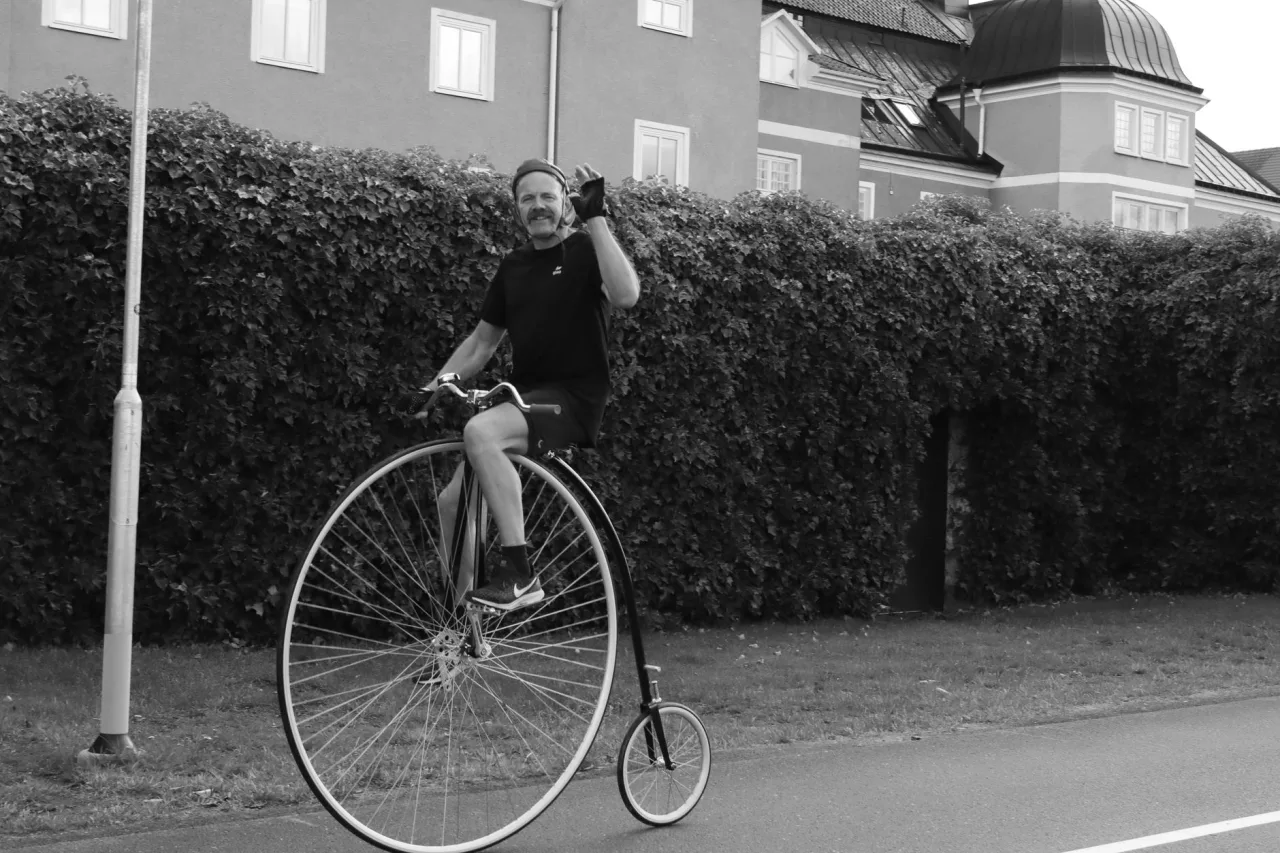
The penny farthing, with its towering front wheel and tiny rear one, is the image most people picture when they think of a Victorian bicycle. It was the first machine widely called a bicycle to offer real speed, and its brief reign shaped everything that came after it. This complete guide explains where the penny farthing came from, why the front wheel is so enormous, how dangerous it really was, and why it vanished almost as fast as it arrived.
The short version
- The penny farthing, also called the high wheel or ordinary, rose to popularity in the 1870s and 1880s.
- Its huge front wheel, up to about 5 feet across, was a way to go faster on a direct-drive bike with pedals fixed to the hub.
- It was fast but risky: riders sat high over the front axle and could be pitched forward in a fall known as a header.
- The chain-driven safety bicycle, with two equal wheels and pneumatic tires, made it obsolete by the 1890s.
What a penny farthing is
A penny farthing is an early bicycle defined by one dramatic feature: a very large front wheel driven directly by pedals attached to its hub, paired with a much smaller trailing wheel. The name is a British joke, comparing the two wheel sizes to a large penny coin beside a tiny farthing. In its own era it was more often called the high wheel or the ordinary bicycle. The rider perches high above the big wheel, steering and pedaling the same wheel at once. For how the machine evolved into what we ride today, see our types of bicycles guide.
Where it came from
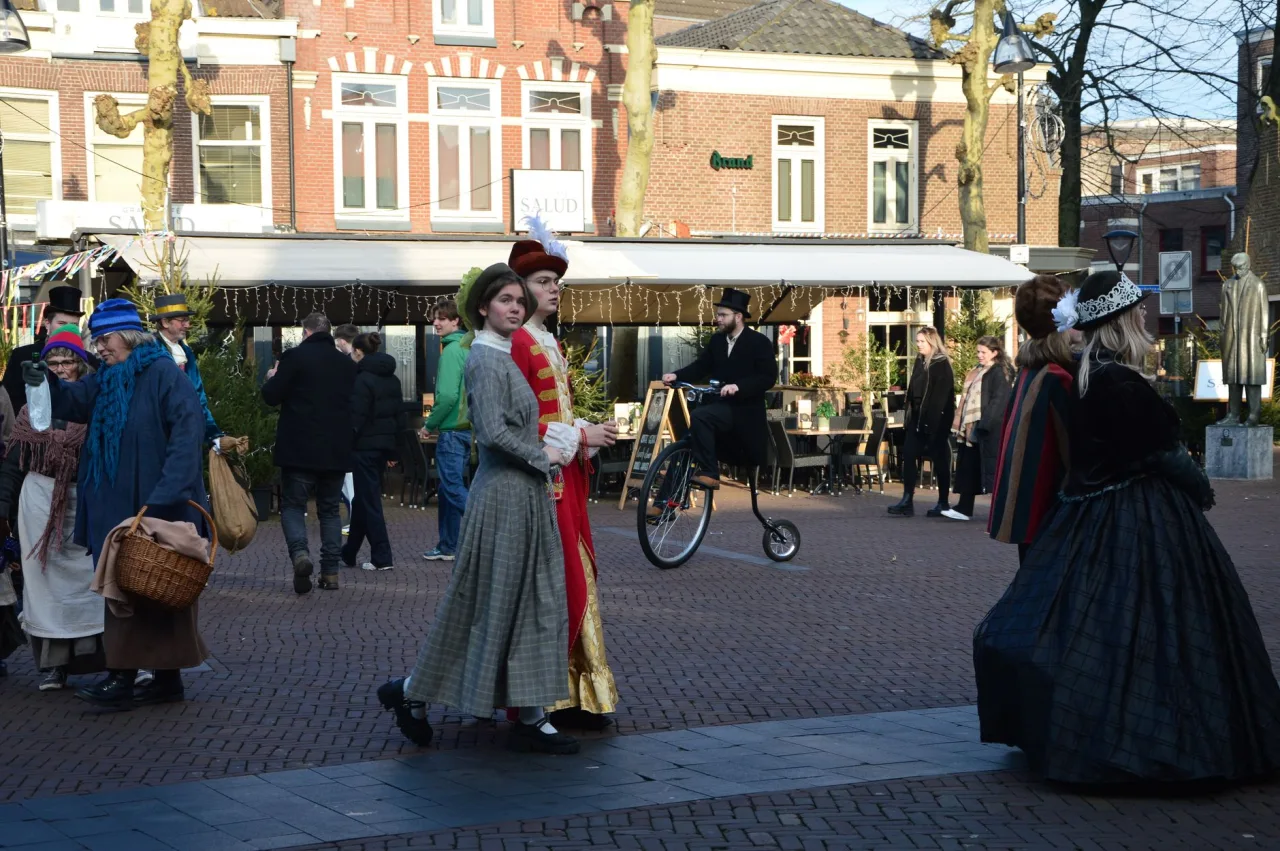
The penny farthing grew out of earlier pedal-driven machines. According to Wikipedia, Eugene Meyer of Paris is regarded as the father of the high bicycle, having patented a wire-spoke tension wheel in 1869, and James Starley of Coventry then contributed key refinements such as tangent spokes. Those lightweight, strong wheels were the breakthrough that made a very large wheel practical. Through the 1870s and 1880s the high wheel became the fashionable machine of its day, ridden by young, athletic, mostly wealthy men who could afford it and mount it.
Why the front wheel is so big
The giant wheel was not decoration, it was gearing. On a penny farthing the pedals are fixed directly to the front hub, so one turn of the pedals equals exactly one turn of the wheel. With that direct-drive setup, the only way to travel further per pedal stroke, and therefore go faster, is to make the wheel bigger:
- A larger wheel covers more ground with each rotation, so the rider reaches a higher speed at the same pedaling cadence.
- Wheels were built as large as the rider's leg length allowed, up to around 5 feet in diameter, so bikes were effectively sized to the person.
- The big wheel also rolled more smoothly over the rough, unpaved roads of the era than a small one would.
This is the same problem modern bikes solve with gears and a chain: how to get more distance per pedal stroke. The penny farthing solved it with sheer wheel size, which worked but came with serious drawbacks.
Did you know?
- Because the wheel was sized to the rider's inseam, a penny farthing was in effect a made-to-measure machine. A wheel too large for your legs meant you could not reach the pedals through the full stroke, which is one reason the design suited a narrow range of riders.
How dangerous was it?
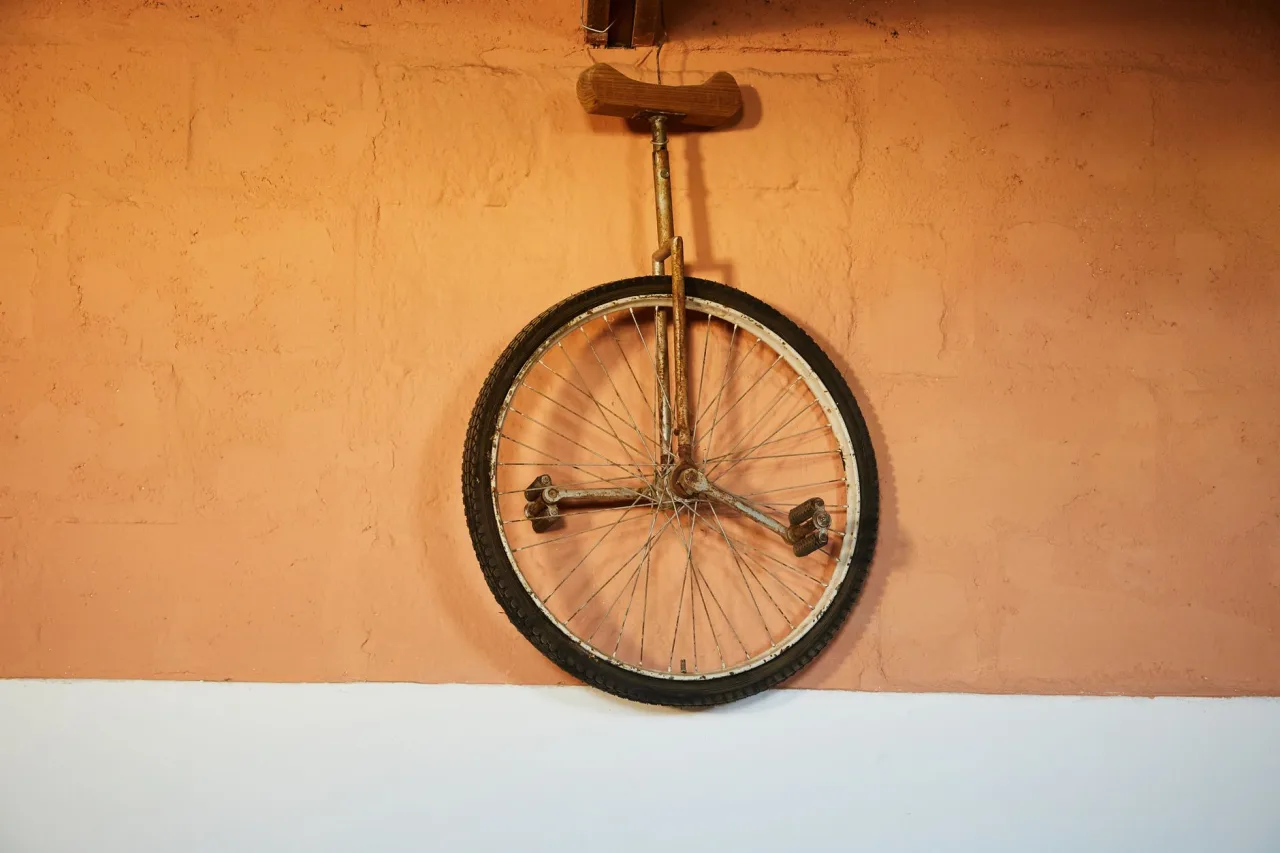
The penny farthing earned a fearsome reputation, and it was deserved. The rider sat high up and almost directly over the front axle, so hitting a rut, a rock, or a stray dog could stop the front wheel and rotate the whole machine forward, throwing the rider over the handlebars headfirst. This fall was so common it had a name, taking a header. Mounting and dismounting from such a height took practice, and there was no freewheel, so the pedals turned whenever the wheel did. Riders developed tricks to reduce the danger, including hanging their legs over the handlebars on descents so they would be thrown off feet-first rather than head-first. It was a machine for the young and confident, which limited who ever rode one.
How the safety bicycle ended its reign
The penny farthing's dominance was short because a much better idea arrived. The safety bicycle, the direct ancestor of the modern bike, solved the high wheel's core problems with two innovations:
- Chain drive: a chain and different-sized sprockets let designers choose a gear ratio independent of wheel size, so a bike with two small, equal wheels could go just as fast without the giant front wheel.
- Pneumatic tires: air-filled tires let smaller wheels ride smoothly over rough roads, removing the last advantage of the big wheel.
With a low, stable frame, two equal wheels, and the rider seated safely between them, the safety bicycle was faster to learn, far less dangerous, and open to almost anyone, including women in a way the high wheel never was. By the 1890s it had displaced the penny farthing almost completely. That lineage runs straight through to today's road bikes and every other machine in our complete bike guide.
Penny farthings today
The penny farthing never fully disappeared. It survives as a beloved antique, a collector's item, and a fixture of vintage cycling events and heritage rides where enthusiasts still ride reproductions. Original Victorian machines are rare and valuable, and prices vary enormously with age, condition, and provenance, so any figure should be confirmed with a specialist dealer or auction house rather than assumed. Modern reproductions are also made for display and for riders who want the experience, though they demand real skill and caution to ride. If the history of cycling appeals to you, our cycling guide puts the penny farthing in the wider story of the sport, and a good local shop, covered in our guide to finding a trusted shop, can point you toward vintage cycling clubs.
Frequently asked questions
Why is it called a penny farthing?
The name is a British comparison to two coins of very different sizes, the large penny and the much smaller farthing, which mirror the bike's big front wheel and tiny rear one. In its own era it was more commonly called the high wheel or the ordinary bicycle. The penny farthing nickname became popular later as the design faded from everyday use.
Why does a penny farthing have such a big front wheel?
Because the pedals are fixed directly to the front hub, one pedal turn equals one wheel turn, so the only way to go faster was to make the wheel bigger and cover more ground per rotation. Wheels were built as large as the rider's leg length allowed, up to about 5 feet across. Modern bikes solve the same problem with a chain and gears instead.
Were penny farthings dangerous to ride?
Yes. The rider sat high and almost over the front axle, so hitting an obstacle could pitch the machine forward and throw the rider headfirst over the bars, a fall known as a header. Mounting and dismounting took skill, and the fixed pedals turned whenever the wheel did. Riders used tricks like descending with their legs over the bars to fall feet-first.
What replaced the penny farthing?
The safety bicycle replaced it in the 1890s. Using a chain drive that set the gear ratio independent of wheel size, plus pneumatic tires that let small wheels ride smoothly, it delivered similar speed with two equal wheels and a low, stable frame. It was easier to learn and far safer, so it quickly made the high wheel obsolete.
Can you still buy a penny farthing today?
Yes. Original Victorian machines survive as rare and valuable antiques, and modern reproductions are made for display and for enthusiasts who want to ride one. Prices vary enormously with age, condition, and provenance, so confirm any value with a specialist dealer or auction house. Vintage cycling clubs are a good starting point for finding one.
More guides on Cycling (General)
Have a question or a topic to suggest?
We read every message. Tell us what you would like to see next on the blog.
Get in touchYou may also like
Full Suspension E-Bike
A full suspension e-bike combines two ideas that suit each other perfectly: a motor that flattens climbs and extends your range, and front-and-rear suspension that soaks up rough ground so you can carry speed
2nd Hand Bikes for Sale
Buying a second hand bike is the fastest way to get more bike for your money, but it rewards patience and punishes haste. A used bike can be a bargain or a money pit

Santa Cruz E-Bike
Santa Cruz built its reputation on capable, well-engineered mountain bikes, and its electric range carries that same trail-focused approach into pedal-assist.