Off-Road E-Bikes · Electric Bikes
Fat Tire Electric Bike: Complete Guide
What fat tyres do, why they pair with motors, the honest weight and range trade offs, and how to choose one for real terrain.
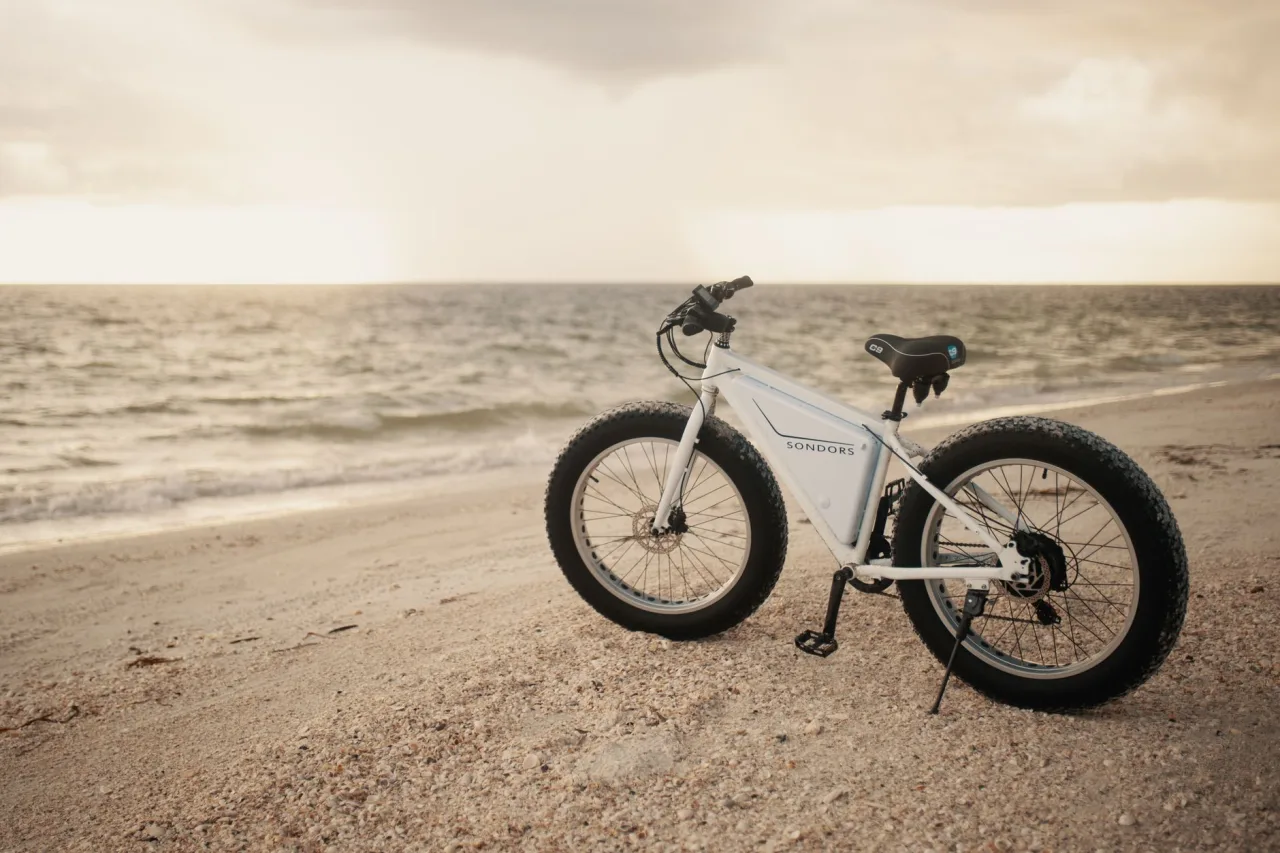
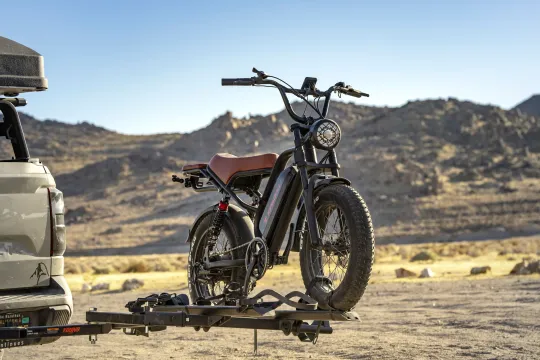
A fat tire electric bike marries oversized, low pressure tyres with pedal assist, and the result is a machine that floats over snow, sand, and rough ground where normal bikes sink or slither. That capability comes with real trade offs in weight and efficiency, though. This guide explains what fat tyres actually do, where the electric assist earns its keep, the honest downsides, and how to choose and price one without overpaying for capability you will never use.
The short version
- Fat tyres, typically 3.8 inches wide or more on wide rims, run at very low pressure to spread the bike's weight and grip soft surfaces like snow and sand.
- The electric assist offsets the extra rolling resistance and weight of fat tyres, which is exactly why fat bikes and motors pair so well.
- The trade off is a heavier bike that draws more battery and rolls slower on pavement, so a fat tire e-bike suits terrain, not speed.
- Expect dependable fat tire e-bikes from roughly 1,200 to 2,500 US dollars depending on components, with prices varying by region so confirm locally.
What fat tyres actually do
A fat bike is defined by its tyres, which are typically 3.8 inches wide or larger, mounted on rims around 2.16 inches wide or wider. Those tyres run at very low pressures, as little as about 5 psi in soft conditions and around 8 to 10 psi for general riding, far below a normal bike. That combination is the whole trick.
A wide tyre at low pressure spreads the bike and rider's weight over a large contact patch, lowering the ground pressure so the bike floats on surfaces that would swallow a skinny tyre. Fat bikes were originally developed for snow and sand, and they can traverse snow, sand, desert, bog, mud, pavement, and ordinary trails. The tyres also soak up bumps, giving a smooth ride over rough obstacles even without suspension. Add a motor and you get all of that capability with far less effort.
Why fat tyres and electric power pair so well
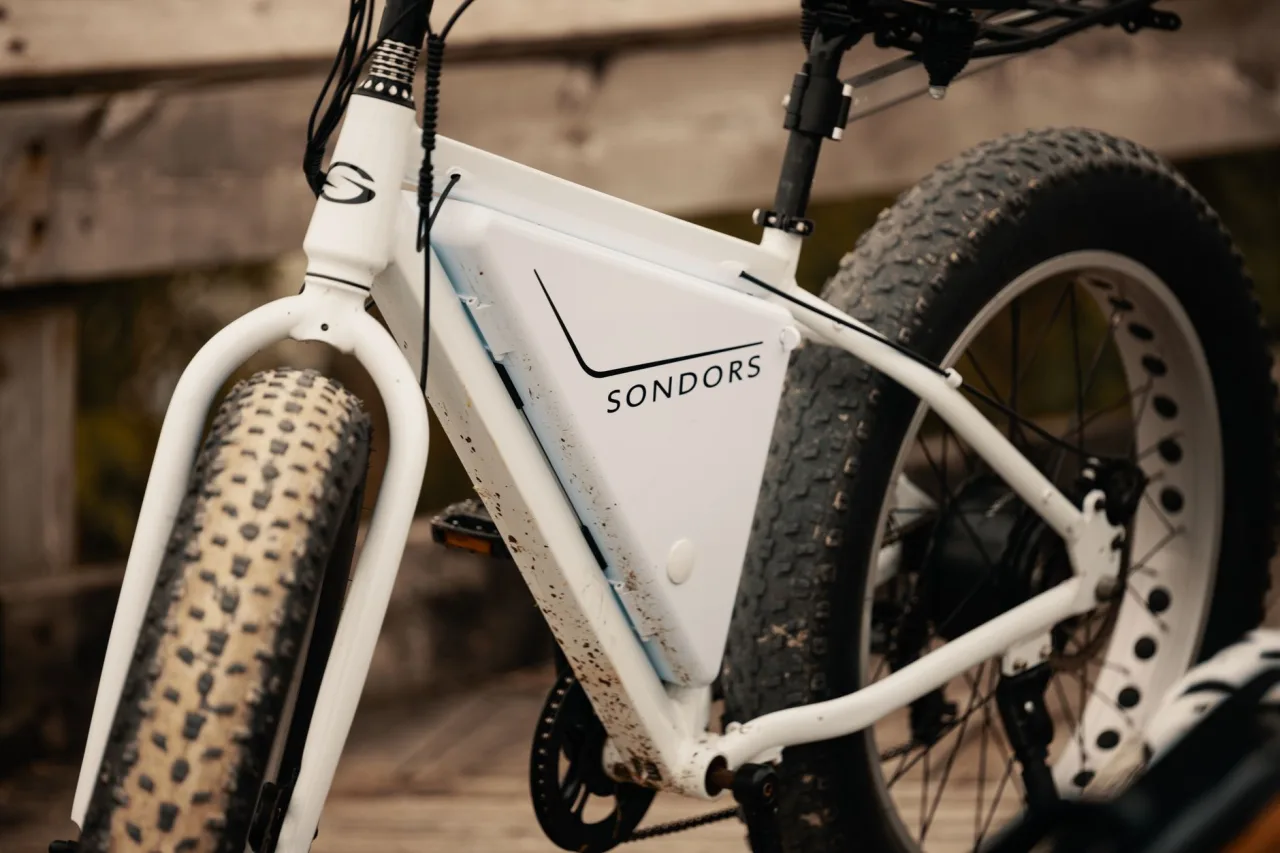
Fat tyres are wonderful on soft ground but they are not free. All that rubber and low pressure grip creates rolling resistance, and the tyres and sturdy frames make fat bikes heavy. That is precisely the burden a motor is built to lift, which is why the fat tire electric bike is such a natural combination.
- Effort offset: pedal assist cancels out the extra drag of wide tyres, so you enjoy the flotation without the leg burning slog.
- Traction plus torque: huge grip combined with motor torque makes climbing loose or steep ground far more achievable.
- Longer adventures: the assist extends how far you can explore snowy or sandy terrain in a day.
- All season use: the flotation opens up winter and beach riding that a normal e-bike simply cannot manage.
If your riding takes you off the tarmac and onto genuinely soft or rough ground, this pairing is hard to beat. For a broader look at off road electric options, our off road electric bike guide compares fat tyres with other approaches, and the electric mountain bike guide covers suspension based trail bikes that tackle rough ground differently.
The honest downsides
Capability this specialised always costs something, and pretending otherwise would do you a disservice. A fat tire e-bike asks you to accept several trade offs.
- Weight: wide tyres, tough rims, and a strong frame plus the motor and battery make these among the heaviest e-bikes to lift and manoeuvre.
- Rolling resistance on pavement: on smooth roads the fat tyres feel slow and draggy compared with a normal e-bike.
- Battery drain: the extra resistance and weight mean the motor works harder, so range on hard surfaces is shorter than a lighter bike would manage.
- Handling feel: low pressure tyres can feel vague or wander slightly on firm ground until you find the right pressure.
None of this matters if you ride mostly on snow, sand, or rough trails, where the flotation more than repays the cost. But if your riding is mainly on pavement, a fat tire e-bike is the wrong tool, and a standard electric bike will be lighter, faster, and more efficient for the same money.
Tip: Tyre pressure is your main tuning dial on a fat bike. Lower pressure gives more flotation and grip on soft ground but more drag and vagueness on hard ground, while higher pressure does the reverse. Experiment within the tyre's stated range to match the surface you ride most, and it transforms how the bike feels.
How the electric side works
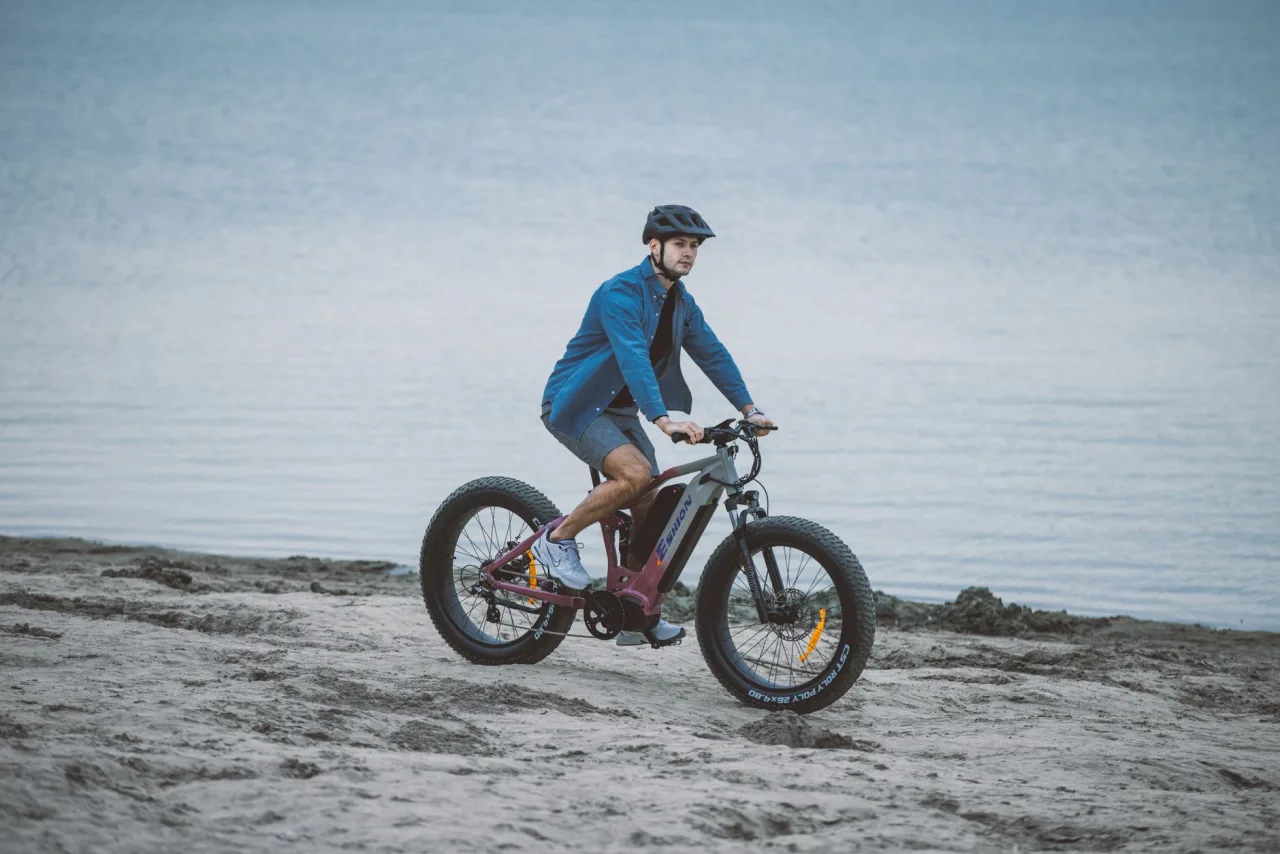
The motor and battery on a fat tire e-bike follow the same rules as any electric bike. Power comes from a hub motor in a wheel or a mid drive motor at the cranks, delivered as pedal assist that helps while you pedal, and cutting out at a set speed, commonly around 25 kilometres per hour in Europe or up to roughly 28 miles per hour for the fastest class in the United States.
On a fat bike, motor choice matters more than usual because the bike is heavy and often ridden on demanding ground. A mid drive motor that uses the gears generally handles steep, loose climbs better, while a powerful hub motor can still work well for flatter snow and beach cruising. Battery capacity in watt hours sets your range, and because fat tyres draw more power, a larger battery is worth prioritising if you plan long off road days. Our electric bike complete guide explains these systems in full so you can weigh motor and battery options with confidence.
Choosing the right fat tire e-bike
Match the bike to your real terrain and a fat tire e-bike delivers enormous fun. A few decisions guide the choice.
- Terrain honesty: confirm you genuinely ride soft or rough ground often, since that is the only place a fat bike beats a normal e-bike.
- Motor and battery: favour a capable motor and a larger battery, because fat tyres are demanding on both.
- Tyre and rim spec: check the tyres are genuinely wide on proper wide rims, since that is what delivers the flotation.
- Storage and transport: factor in the weight and bulk, because a heavy fat e-bike is harder to lift onto a rack or carry upstairs.
If you want the mechanical fundamentals without the motor first, our fat tire bike guide and fat bike guide cover the tyre and frame side in depth, and reading them alongside this one gives you the complete picture before you commit.
Watch out: A fat tire e-bike's weight is easy to forget in the excitement of the showroom. Before buying, think hard about lifting it onto a car rack, carrying it up steps, or manoeuvring it in a shed. If those tasks will be a struggle, either arrange the right storage and a sturdy rack first, or reconsider whether a lighter bike fits your life better.
What a fat tire e-bike costs
Fat tire electric bikes sit a little above equivalent standard e-bikes, because the wide tyres, tough rims, and strong frames add cost. As a realistic guide, dependable models commonly run from about 1,200 to 2,500 US dollars, with premium builds climbing higher, and the usual reminder that prices vary by region, specification, and retailer, so confirm locally.
Value concentrates in the motor, the battery, and the tyres and frame, since those are what deliver the flotation and the effortless power the whole concept promises. Spending too little often means a weak motor and a small battery that struggle exactly where a fat bike is supposed to excel. Because these bikes are heavy and see hard use, a supportive local shop is a real asset. Our directory of trusted local bike shops explains how to find one that can fit, service, and keep a fat tire e-bike rolling through demanding conditions.
Frequently asked questions
What is a fat tire electric bike good for?
A fat tire electric bike excels on soft and rough ground where normal bikes struggle, such as snow, sand, desert, mud, and rough trails. The wide, low pressure tyres spread the bike's weight so it floats on surfaces that would swallow a skinny tyre, while the motor offsets the extra effort those tyres demand. It suits riders who genuinely explore off the tarmac. For mostly paved riding, a lighter standard e-bike is a better fit.
Why are fat tyres paired with electric motors?
Fat tyres create a lot of rolling resistance and fat bikes are heavy, which is exactly the burden a motor is built to lift. Pedal assist cancels out the extra drag so you enjoy the flotation without the leg burning effort, and motor torque combined with the tyres' huge grip makes climbing loose or steep ground far more achievable. The assist also extends how far you can explore snowy or sandy terrain in a day.
What are the downsides of a fat tire e-bike?
The trade offs are real. Fat tire e-bikes are among the heaviest to lift and manoeuvre, they feel slow and draggy on smooth pavement, and the extra resistance and weight drain the battery faster on hard surfaces, shortening range. Low pressure tyres can also feel vague on firm ground until you find the right pressure. None of this matters off road, but on pavement a standard e-bike is lighter, faster, and more efficient.
What tyre pressure should a fat bike run?
Fat tyres run far lower than normal bike tyres, as little as about 5 psi in soft conditions and around 8 to 10 psi for general riding. Pressure is your main tuning dial: lower gives more flotation and grip on soft ground but more drag on hard ground, while higher does the reverse. Experiment within the tyre's stated range to match the surface you ride most, since it transforms how the bike feels.
How much does a fat tire electric bike cost?
Fat tire electric bikes sit a little above equivalent standard e-bikes because the wide tyres, tough rims, and strong frames add cost. Dependable models commonly run from about 1,200 to 2,500 US dollars, with premium builds higher. Prices vary by region, specification, and retailer, so confirm locally. Value concentrates in the motor, battery, and tyres and frame, so spending too little often means a weak motor and small battery that struggle where a fat bike should excel.
The Wikipedia article on fat bikes documents the tyre widths, low pressures, and terrain these bikes are built for, and the electric bicycle article explains the motor and battery systems that make a fat tire e-bike so capable.
More guides on Electric Bikes
Have a question or a topic to suggest?
We read every message. Tell us what you would like to see next on the blog.
Get in touchYou may also like
Fat Tire Bike
A fat tire bike is instantly recognizable by its enormous, balloon-like tires, and those tires are the whole point. This complete guide explains what fat bikes are built

Fat Bike: The Complete Guide
A fat bike floats over snow, sand, and mud that stops other bikes. Here is what fat bikes do well, where they struggle, and how to decide if one suits you.
Off Road Electric Bike Guide
An off road electric bike pairs a rugged frame and real suspension with a pedal assist motor. Learn the types, the features that matter, honest price ranges and how to match a bike to your trails.