Gear Guide · Gear & Accessories
Bike Pump: The Complete Guide
Types, valves, pressure, and how to choose the right pump for home and road.
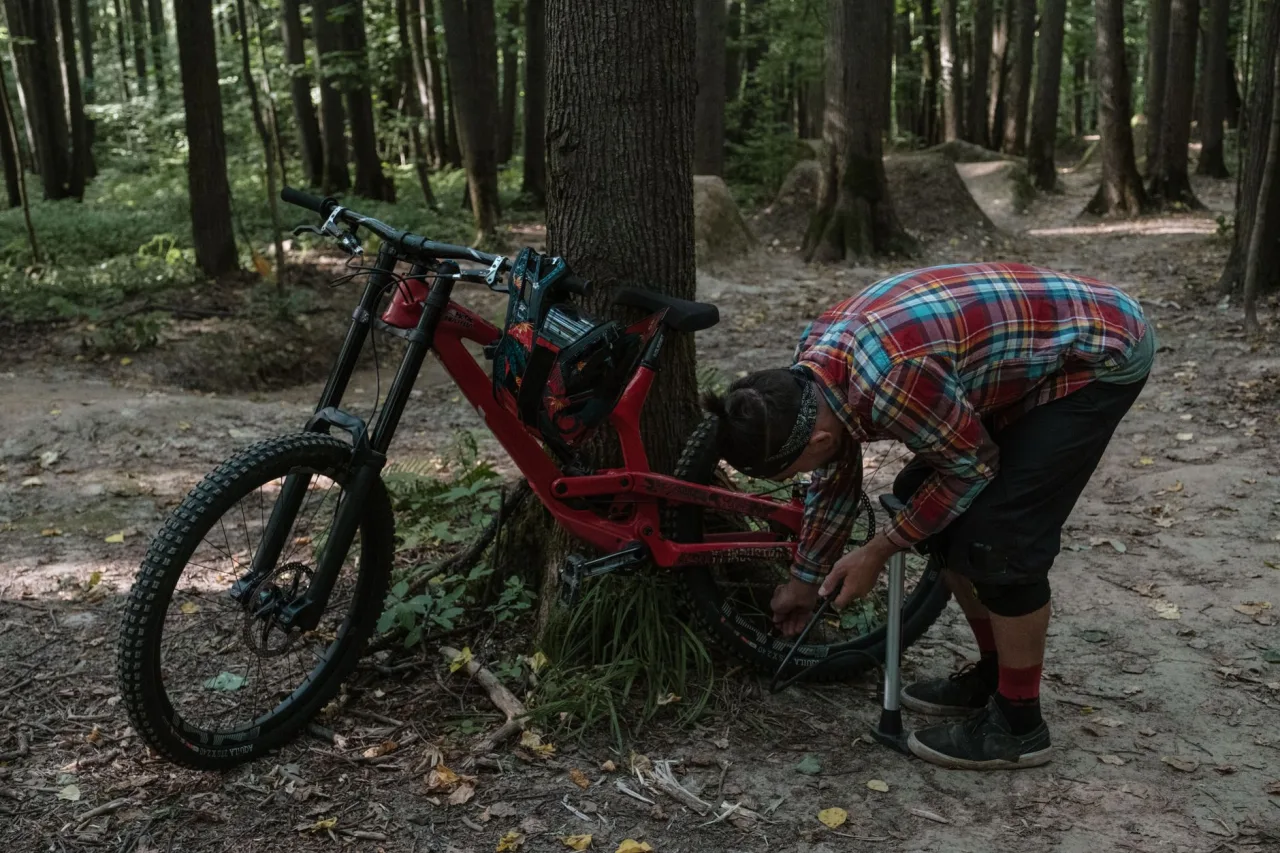
A bike pump is the most-used tool in cycling and the one most people buy wrong. The right pump depends on your valves, your tire pressures, and whether you are inflating at home or fixing a flat on the road. This complete guide covers every pump type, the valve systems they fit, how to read the pressure you need, and how to choose without overspending.
The short version
- Own two pumps: a floor pump for accurate home inflation and a compact mini pump or CO2 inflator for roadside flats.
- Match the pump to your valves. Presta and Schrader are the two common types, and most modern pumps handle both.
- Inflate to the pressure range printed on your tire sidewall, using a pump with a gauge for anything that matters.
- A quality floor pump lasts many years, so it is worth spending a little more on a sturdy gauge and a good head.
Why the right pump matters more than you think
Correct tire pressure affects nearly everything about how a bike rides: grip, rolling speed, comfort, and how often you flat. A bicycle pump is simply a device that moves air into the tire, but the type you choose determines how accurately and how easily you can hit that target pressure.
Under-inflated tires roll slowly, feel sluggish, and risk pinch flats where the tube gets crushed against the rim. Over-inflated tires ride harsh and lose grip. Because tires lose pressure naturally over days, especially at higher pressures, a pump is not a once-a-year tool but a regular part of riding. Getting the right one makes that routine effortless instead of a chore, which is exactly what our wider guide to essential cycling gear stresses about the tools worth owning.
The main types of bike pump
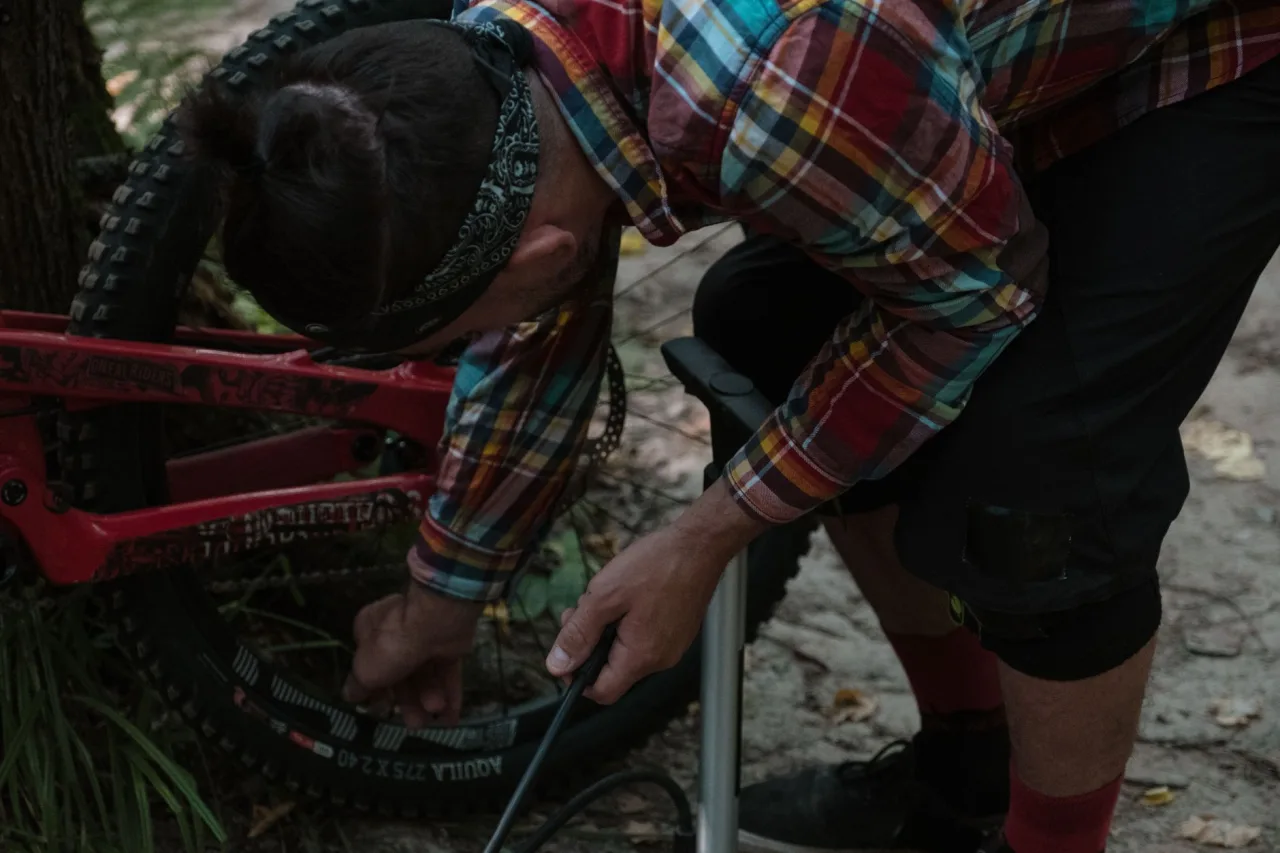
Pumps fall into a few clear categories, each built for a different job. Most riders end up owning at least two: one for home and one for the road.
- Floor pump, also called a stand or track pump. The base rests on the floor and you use full arm strokes with a large handle. It moves a lot of air per stroke, usually has a built-in gauge, and is the best choice for accurate inflation at home.
- Hand pump, including mini pumps. Small and light enough to carry on the bike or in a pack. They move less air per stroke, so they take longer, but they get you home after a flat. Integral-head mini pumps seal better than tube-style ones.
- Foot pump. Not usually designed for bikes, but workable for large low-pressure tires like those on mountain bikes. Less practical for high-pressure road tires.
- CO2 inflator. Uses a small pressurized cartridge to inflate a tire in seconds. Superb for racing and fast roadside repairs, but each cartridge is single use, so it is a supplement to a pump rather than a replacement.
- Electric or rechargeable pump. A newer category that inflates automatically to a set pressure. Convenient, though heavier and pricier than a simple mini pump.
Understanding valves: Presta, Schrader, and Dunlop
The valve on your tube determines which pump head you need, and this is the single most common source of confusion for new riders. There are three types, and two of them cover almost every bike.
- Schrader valve. The wider valve, the same type used on car tires. Common on mountain bikes, hybrids, kids' bikes, and many entry-level bikes. Its 8 mm diameter and spring-based closure make it robust and easy to inflate at any gas station.
- Presta valve. The slimmer 6 mm valve found on most road bikes and higher-end bikes. It has a small locknut you unscrew before pumping, and its narrow body allows a smaller, stronger hole in the rim. Presta accepts a simple push-on pump head and seals by air pressure.
- Dunlop valve, also called a Woods valve. Common in parts of Europe and Asia. It can often be inflated with a Presta pump or adapter.
According to the reference on the Presta valve, its slimmer diameter lets rims stay stronger because the drilled hole is smaller, which is why performance wheels favor it. Most modern floor pumps have a dual head or a reversible chuck that fits both Presta and Schrader, so you rarely need separate pumps. If you are shopping for tubes or tires, our complete guide to bike tyres covers matching valve length to your rim depth.
Tip: unscrew the Presta locknut first
The most common reason a Presta valve will not take air is that the small brass locknut at the tip is still closed. Unscrew it until it stops, press the valve once to free it, then attach the pump. Remember to close it again after inflating. Forgetting this step frustrates more new riders than any pump fault.
How much pressure does your tire need?
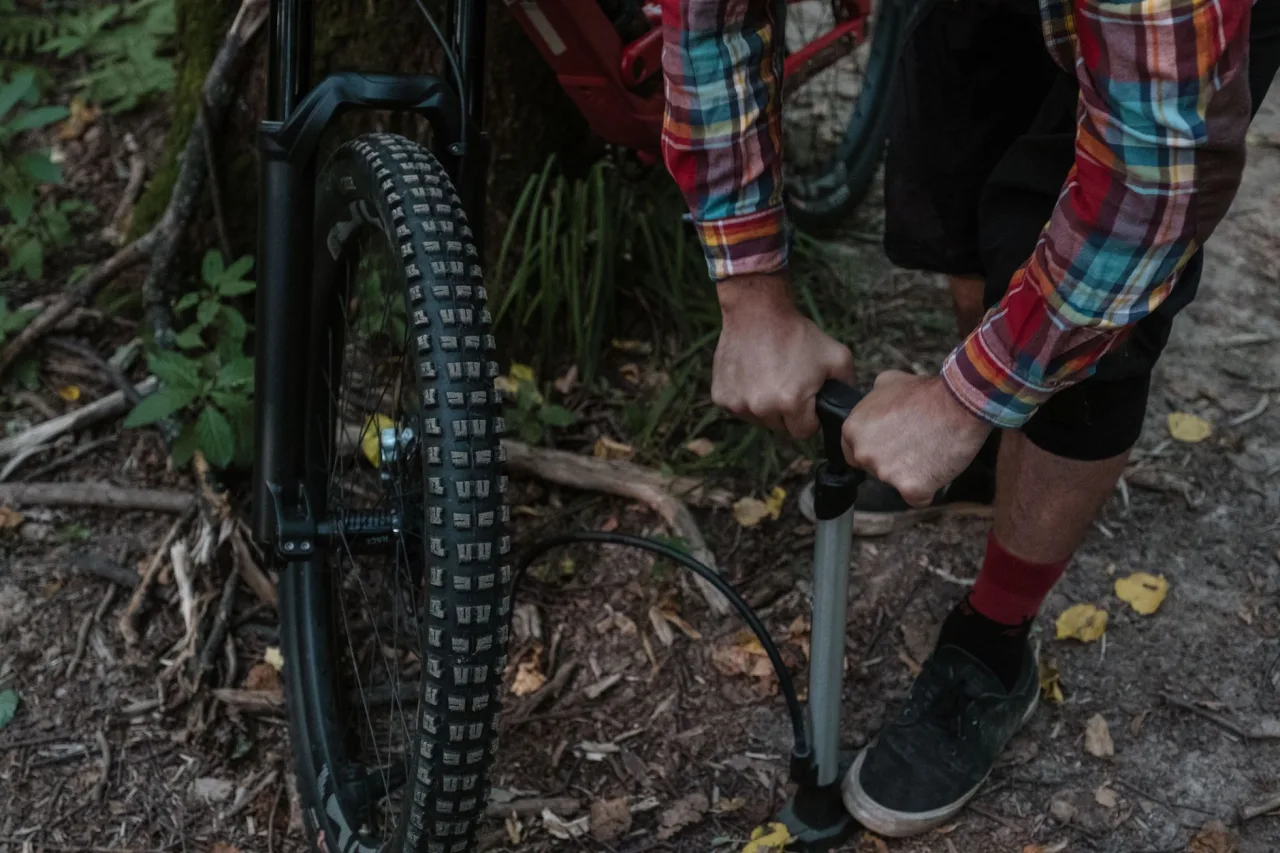
Every tire has a recommended pressure range printed on the sidewall, usually in psi and bar. Staying within that range is the safe rule, and where you sit inside it depends on your weight, the terrain, and your priorities.
- Road tires run the highest pressures, often well above 60 psi, for low rolling resistance on smooth surfaces.
- Mountain-bike tires run much lower, frequently in the 20s to low 30s psi, for grip and cushioning on rough ground. This is where a floor pump with an accurate low-range gauge helps.
- Hybrid and commuter tires sit in the middle, balancing speed and comfort.
Heavier riders sit toward the top of the range, lighter riders toward the bottom. Lower pressures add grip and comfort but raise pinch-flat risk if you go too far; higher pressures roll faster but ride harsher. A pump with a clear, accurate gauge is what lets you dial this in, which is why a good floor pump is worth the small premium. For how tires, tubes, and pumps fit into a bike's overall setup, see our complete guide to bike components.
Choosing the right pump for you
The best pump is the one that matches how and where you ride. Rather than chasing a single do-everything tool, think in terms of a home pump plus a roadside backup.
- For home: buy a floor pump with a large, readable gauge, a stable base, and a dual head. This is the workhorse you will use weekly, so prioritize build quality over saving a few dollars.
- For the road or trail: add a mini pump or a CO2 inflator. Choose a mini pump for unlimited reliability and no consumables, or a CO2 inflator for speed if you carry spare cartridges and a mini pump as backup.
- For mountain biking: prioritize a pump that reads low pressures accurately, since a few psi changes how the tire grips.
- For convenience: consider an electric pump if you value set-and-forget inflation and do not mind the extra weight and cost.
Prices vary widely by brand and quality, so treat any figure as a broad range and confirm locally. A basic mini pump is inexpensive, a solid floor pump costs more but lasts many years, and electric pumps sit at the higher end. Spending a little more on the floor pump you use constantly usually pays off; spending big on a backup you rarely need often does not.
Using and maintaining your pump
A pump is simple, but a few habits keep it accurate and long lasting. Poor technique is behind most inflation frustration, not a faulty tool.
- Seat the head squarely. Push the chuck straight onto the valve and lock it before pumping. A crooked head leaks and can bend a Presta valve.
- Watch the gauge, not the clock. Inflate to the target pressure rather than a set number of strokes, since strokes vary by pump.
- Release cleanly. Unlock and pull the head straight off to avoid unscrewing the Presta core, which can let air out.
- Store it dry. Keep the pump out of grit and damp so the internal seal lasts. A worn seal is the usual reason an old pump loses power.
If your pump ever fails to hold pressure despite good technique, the internal seal or O-ring has likely worn, and many quality pumps sell rebuild kits. Keeping a working pump is part of the same routine maintenance that keeps your whole bike reliable, alongside chain care covered in our guide to bike chains.
Where to buy and when a shop helps
Pumps are widely available online and in every bike store, and for a simple mini pump either works fine. A local shop adds value when you want to feel the handle action, compare gauge readability, or get advice on the right head for an unusual valve. Staff can also show you the correct inflation technique in a minute, which saves a lot of trial and error. If you would rather have a shop handle tire and pressure setup as part of a service, our guide on finding a trusted bike shop near you explains how to choose one and what routine service should cost.
Frequently asked questions
What type of bike pump should I buy?
For most riders the ideal setup is two pumps: a floor pump with a gauge for accurate inflation at home, and a compact mini pump or CO2 inflator to carry for roadside flats. The floor pump is the workhorse you use weekly, so prioritize a sturdy build and a readable gauge, while the portable option just needs to be light and reliable enough to get you home.
What is the difference between Presta and Schrader valves?
Schrader is the wider valve used on car tires, common on mountain bikes, hybrids, and entry-level bikes, and easy to inflate anywhere. Presta is the slimmer valve found on road and higher-end bikes, with a small locknut you unscrew before pumping and a narrower body that lets rims stay stronger. Most modern pumps have a dual head that fits both, so you rarely need separate pumps.
How do I know how much to inflate my tires?
Every tire prints a recommended pressure range on its sidewall in psi and bar. Stay within that range, sitting toward the higher end if you are heavier or want speed, and toward the lower end for grip and comfort. Road tires run high pressures, mountain-bike tires run much lower for traction, and hybrids sit in between. Use a pump with an accurate gauge to hit the target.
Why will my Presta valve not take air?
The most common cause is that the small brass locknut at the tip of the valve is still closed. Unscrew it until it stops, press the valve once to free it, then attach the pump and inflate. Close the locknut again afterward. This single step trips up more new riders than any actual pump fault, so check it first.
Are CO2 inflators better than a mini pump?
They are faster, inflating a tire in seconds, which is why racers favor them. But each cartridge is single use, so if you use it up you are stranded without a backup. A mini pump is slower but works indefinitely with no consumables. The safest approach is to carry a CO2 inflator for speed and a small mini pump as a reliable fallback.
More guides on Gear & Accessories
Have a question or a topic to suggest?
We read every message. Tell us what you would like to see next on the blog.
Get in touchYou may also like
Bike Tyres: The Complete Guide
The only part of your bike that touches the ground, and the cheapest big upgrade. Learn tyre types, sizing, width, pressure, and how to get fewer punctures.
Bike Components: The Complete Guide
A plain-English tour of every bike component, from frame and drivetrain to brakes and contact points, with honest guidance on groupset tiers and which upgrades are worth the money.
Cycling Gear: The Complete Guide
The right cycling gear keeps you safe, comfortable, and your bike secure. Here are the essentials, from helmet to lock, and what actually matters.