Buying Guide · Kids & City Bikes
Hybrid Bike: The Complete Guide
Subtypes, wheels, sizing, and how a hybrid compares with road, mountain, and gravel bikes for everyday riding.
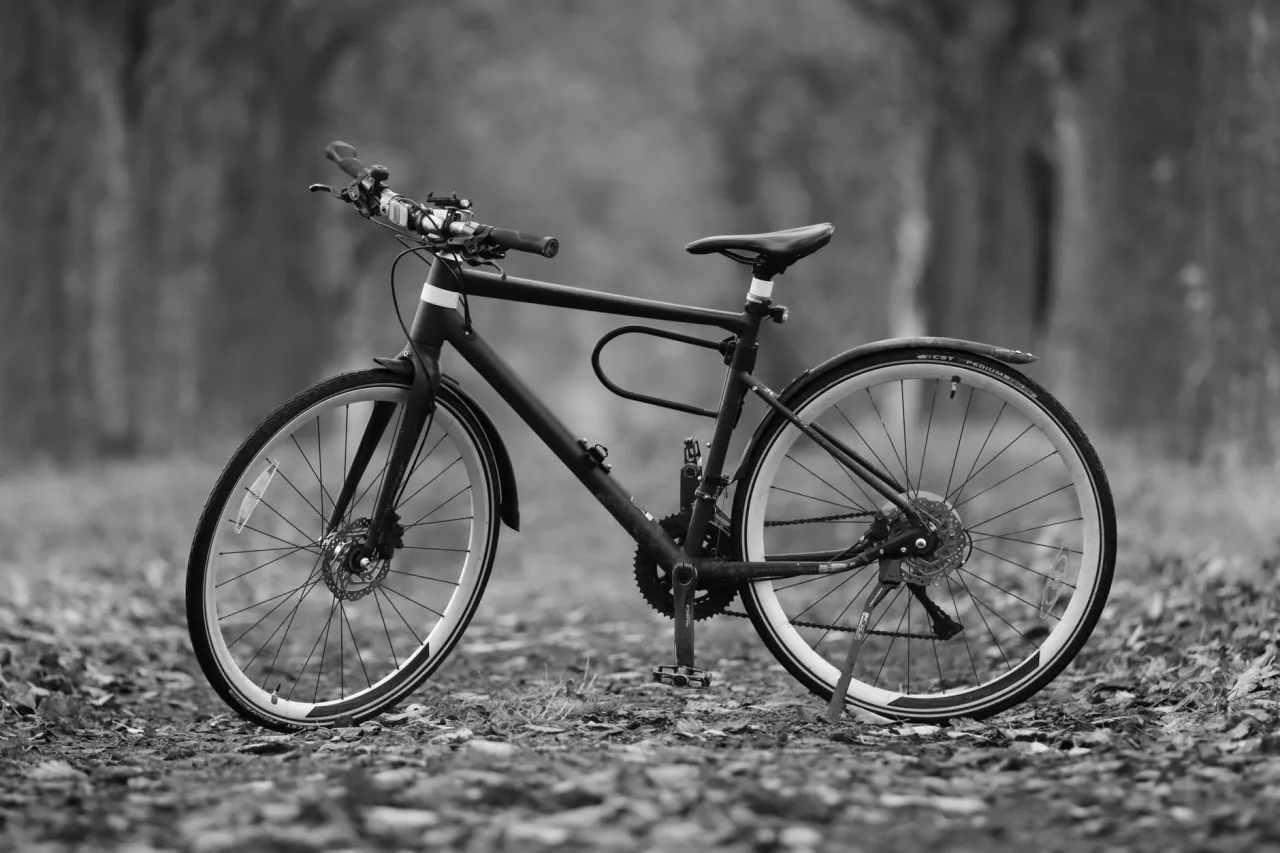
A hybrid bike is the do-everything answer for riders who want one comfortable, practical bike for commuting, fitness, and weekend spins. It borrows the upright comfort of a mountain bike and the efficiency of a road bike, landing in a versatile middle ground. This guide explains what a hybrid is, the subtypes, how to size and choose one, and what to budget.
The short version
- A hybrid blends road, touring, and mountain bike traits: flat handlebars, an upright seating position, and medium-width tyres.
- It is the best single choice for commuting, casual fitness, and paved paths, not for racing or serious off-road trails.
- Subtypes range from fast, road-leaning fitness hybrids to comfort and trekking models set up for luggage and mudguards.
- A solid hybrid usually costs a few hundred US dollars, with quality rising through the range. Prices vary, so confirm locally.
What a hybrid bike actually is
According to Wikipedia's hybrid bicycle reference, hybrids blend characteristics from more specialized road bikes, touring bikes, and mountain bikes. In practice that means the flat, straight handlebars and upright seating posture of a mountain bike, combined with wheels and tyres closer to a road bike for efficiency on pavement. The result is a bike that is easy to control, comfortable to sit on, and quick enough for real distances, without the aggressive riding position of a racing bike.
If you are still deciding between broad categories, our types of bicycles guide puts hybrids in context alongside road, mountain, and gravel bikes.
Who a hybrid is for
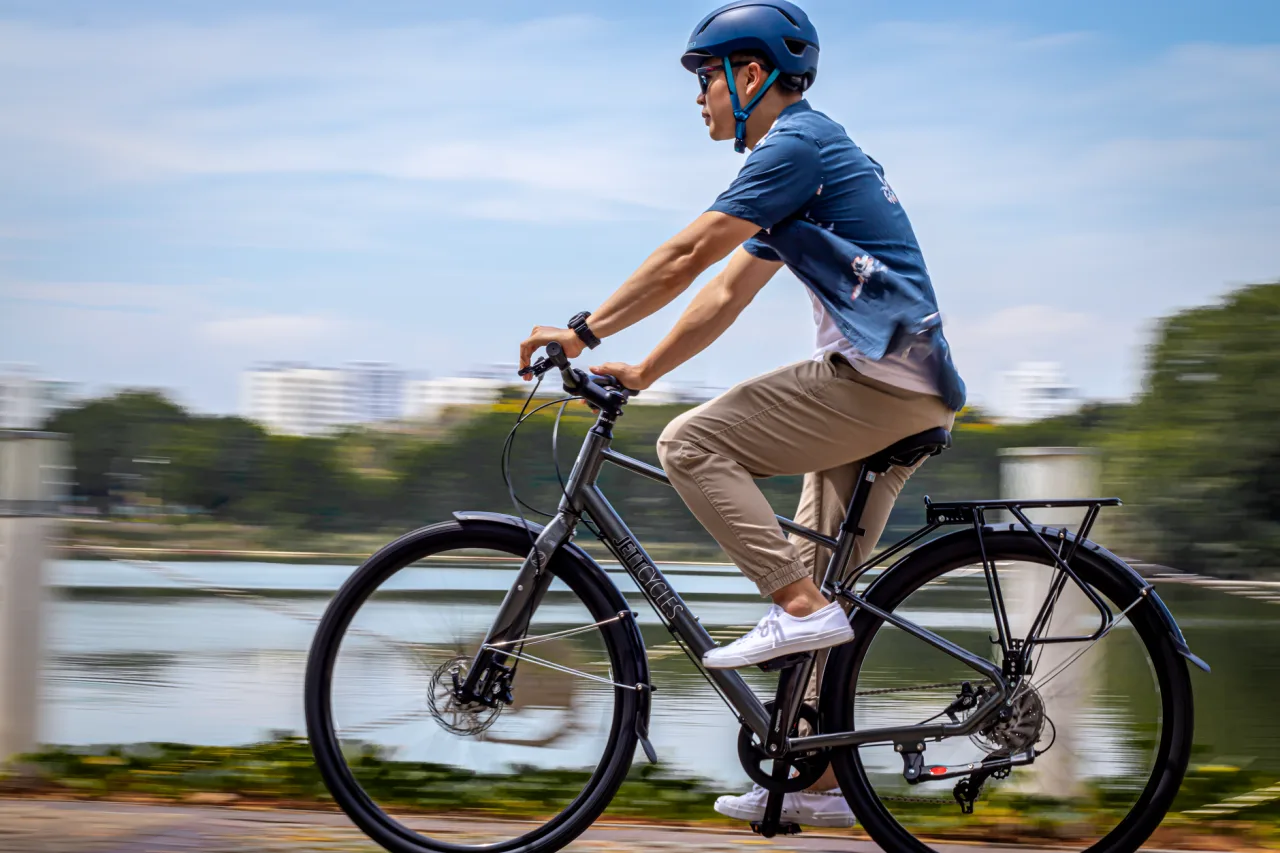
Hybrids suit a wide range of everyday riders. Consider one if you:
- Commute on roads, cycle paths, and the occasional gravel shortcut.
- Want a comfortable, upright position that is easy on the back, neck, and wrists.
- Ride for fitness and leisure rather than competition.
- Value practicality, with room to fit racks, mudguards, and lights.
A hybrid is a compromise by design, so it is not the fastest bike on smooth tarmac nor the most capable on rough trails. That compromise is exactly why it is the most popular choice for general riding.
Hybrid subtypes explained
The Wikipedia reference identifies several recognised categories, which is useful because the word hybrid covers quite different bikes.
- Fitness or sport hybrids: The most road-leaning, with narrower tyres and lighter frames for faster riding and exercise.
- Cross bikes: Designed for mixed terrain with wider, semi-treaded tyres for confidence on gravel and paths.
- Commuter bikes: Set up for daily transport with carriers, fenders, and lights.
- Trekking bikes: Equipped with touring accessories like mudguards and pannier racks for longer, loaded rides.
- Comfort and city bikes: The most upright and relaxed, often with sturdy frames and cushioned contact points.
Knowing which end of the range you want, sporty or relaxed, narrows the search quickly.
Wheels, tyres, and gearing
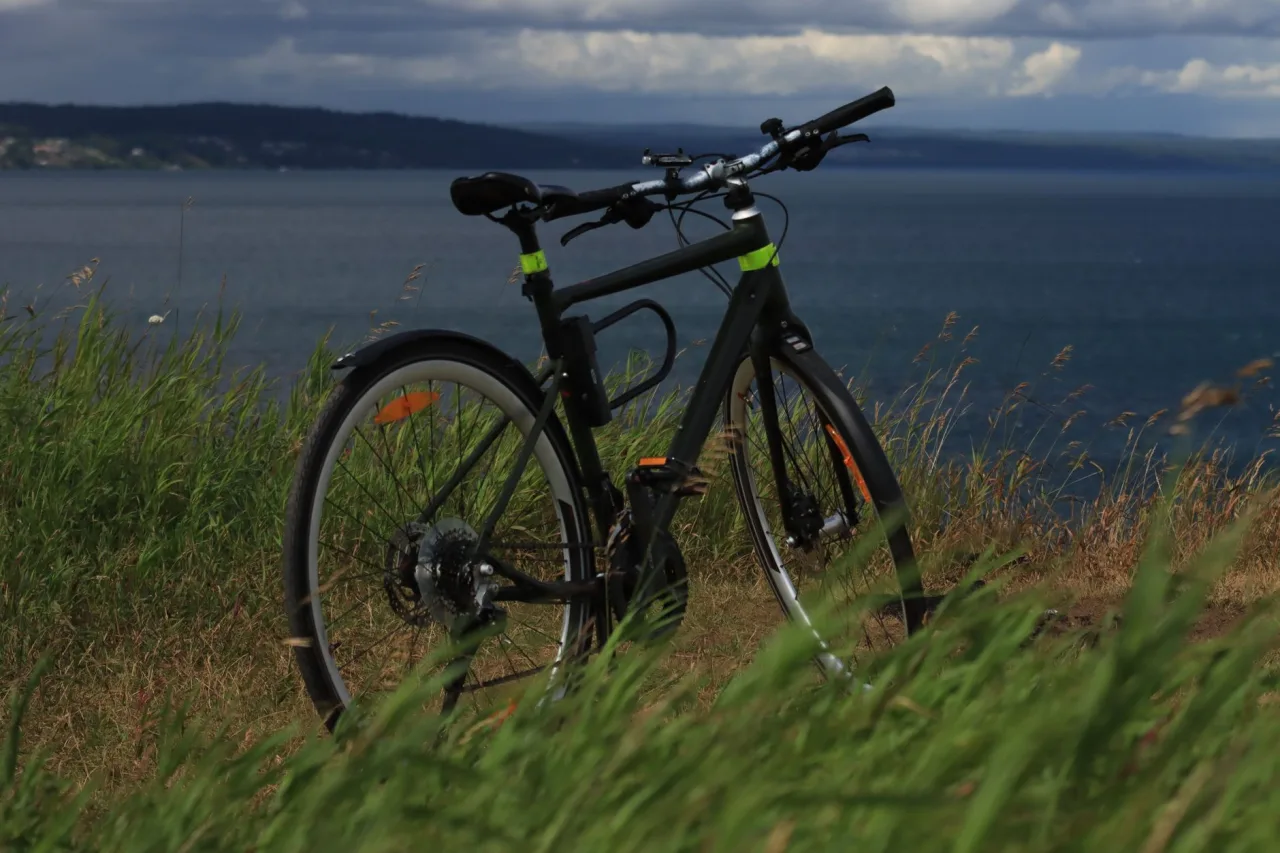
Most hybrids use 700c wheels, the same diameter as many road bikes, though some smaller-framed models use 26 inch wheels. Tyre widths commonly run from around 28mm on sportier hybrids to 38 to 50mm on comfort and city models, which gives a smoother ride and better grip on rougher surfaces. Wider tyres at moderate pressure are one of the easiest comfort upgrades on any hybrid.
Gearing is usually broad and forgiving, with a wide spread of gears to handle both hills and flat cruising. You do not need a huge number of gears, just a range that covers your local terrain. If you want to understand tyre choices in depth, see our bike tyres guide.
Buyer tip
- Match the subtype to your real routes, not your aspirations. If ninety percent of your riding is a flat commute, a sporty fitness hybrid will feel great. If you want to carry shopping and ride in all weather, prioritise a model that already has, or can fit, racks and mudguards.
Getting the fit right
Comfort is the whole point of a hybrid, so fit matters more than any spec sheet. Frame size is the foundation: too big is hard to control, too small feels cramped. A few pointers:
- Standover clearance: You should be able to stand over the top tube with both feet flat and a little room to spare.
- Saddle height: With the pedal at its lowest point, your knee should be only slightly bent. This protects your knees and adds power.
- Reach: You should feel upright and relaxed, not stretched out. Stem and bar tweaks can fine-tune this.
Sizing charts get you close, but a test ride is worth far more than a chart. This is one of the best reasons to buy from a good local shop, which can size you properly and adjust the bike before you leave.
Hybrid versus other bikes
It helps to see where a hybrid sits relative to its neighbours:
- Versus a road bike: A road bike is faster and more efficient on tarmac but less comfortable and less versatile. Choose a hybrid if comfort and practicality matter more than outright speed.
- Versus a mountain bike: A mountain bike handles rough trails far better but is slower and heavier on the road. Choose a hybrid if most of your riding is paved.
- Versus a gravel bike: A gravel bike offers drop bars and more off-road speed. Choose a hybrid for a more upright, casual feel.
Realistic hybrid bike prices in 2026
Prices vary by brand, spec, and region, so treat these as ranges and confirm locally.
- Entry hybrid: roughly 350 to 600 US dollars, fine for commuting and casual riding.
- Mid-range: roughly 600 to 1,200, with lighter frames, better gearing, and hydraulic disc brakes.
- Premium and electric-assist: 1,200 and up, with electric hybrids costing more again.
Reputable brands offering hybrids include Trek, Specialized, Giant, and Cannondale, among many others. Spend enough to get reliable braking and gearing, then put any remaining budget towards comfort and accessories. If you want a power boost for hills or longer commutes, our electric bike guide covers assisted options, and a folding hybrid may suit small spaces, covered in our folding bike guide.
Frequently asked questions
What is a hybrid bike best for?
A hybrid is best for commuting, fitness riding, and casual leisure on roads, cycle paths, and light gravel. It combines an upright, comfortable position with road-style efficiency, and it easily accepts racks, mudguards, and lights for practical everyday use. It is not built for racing or serious off-road trails, which is where dedicated road and mountain bikes pull ahead.
Can a hybrid bike go off-road?
A hybrid handles light off-road use like gravel paths, canal towpaths, and packed trails, especially cross-style models with wider, semi-treaded tyres. It is not designed for technical mountain bike trails with roots, rocks, and drops, where you need suspension and grippier tyres. For occasional rough surfaces a hybrid is fine, but for real trail riding choose a mountain bike.
How do I choose the right size hybrid bike?
Start with the maker's size chart based on your height, then check standover clearance so you can stand over the top tube with room to spare. Set the saddle so your knee is only slightly bent at the bottom of the pedal stroke, and make sure the reach feels upright and relaxed rather than stretched. A test ride and a shop fitting are the best way to confirm.
Is a hybrid or a road bike better for commuting?
For most commuters a hybrid is more practical, thanks to its upright position, wider tyres, and easy fitting of racks and mudguards. A road bike is faster and more efficient on smooth tarmac but less comfortable and harder to fit for luggage. Choose a road bike only if your commute is long, paved, and speed is your priority.
How much should I spend on a hybrid bike?
A reliable entry hybrid typically costs roughly 350 to 600 US dollars, while mid-range models at around 600 to 1,200 add lighter frames, better gears, and hydraulic disc brakes. Premium and electric hybrids cost more again. Prices vary by brand and region, so confirm locally, and prioritise dependable braking and gearing over a long list of features.
More guides on Kids & City Bikes
Have a question or a topic to suggest?
We read every message. Tell us what you would like to see next on the blog.
Get in touchYou may also like
Road Bike: The Complete Guide
Choose the right road bike with confidence: the main types, frame materials, components that matter, why fit beats everything, and how much to sensibly spend.

Mountain Bike: The Complete Guide
Everything you need to choose a mountain bike: the main types, wheel sizes, key components, how to pick your first bike and the gear and care that keep it running.
Gravel Bike: The Complete Guide
Everything a first-time buyer needs on gravel bikes: geometry, tyre clearance, frame materials, what they are used for and how much to spend.